

Learning Center

Courses

By course type

Courses

Buddhist Sutras

15 courses
The Lotus SutraStructured Course

The Lotus Sutra

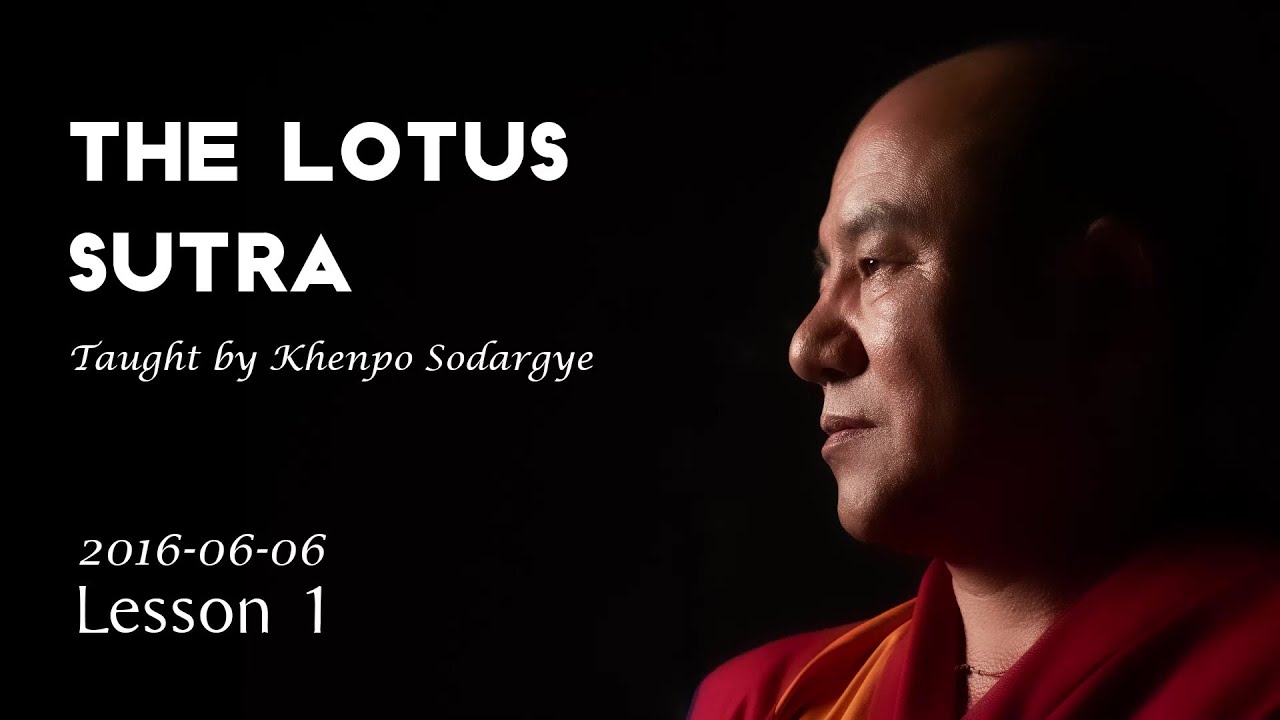
Teachings by Khenpo Sodargye. The Lotus Sutra (Saddharma Pundarika Sutra) is one of the most important scriptures in Mahayana Buddhism, hailed as the "King of Sutras." Its core teaching is "opening the provisional to reveal the real" and "unifying the three vehicles into one"—the Buddha reveals that the three vehicles (Śrāvaka, Pratyekabuddha, and Bodhisattva) are merely skillful means, and ultimately there is only One Buddha Vehicle, meaning all sentient beings can attain Buddhahood. The sutra expounds the philosophy of "true reality of all dharmas" and the "ten suchnesses," using seven parables including the Burning House to illustrate the Buddha's original intent in appearing in the world. Divided into the first fourteen chapters of the Trace Gate and the latter fourteen chapters of the Origin Gate, it reveals the Buddha's true state of having attained enlightenment since the remote past, emphasizing the immeasurable merit of upholding and reciting this sutra. Teachings by Khenpo Sodargye.The Lotus Sutra (Saddharma Pundarika Sutra) is one of the most important scriptures in Mahayana Buddhism, hailed as the "King of Sutras." Its core teaching is "opening the provisional to reveal the real" and "unifying the three vehicles into one"—the Buddha reveals that the three vehicles (Śrāvaka, Pratyekabuddha, and Bodhisattva) are merely skillful means, and ultimately there is only One Buddha Vehicle, meaning all sentient beings can attain Buddhahood. The sutra expounds the philosophy of "true reality of all dharmas" and the "ten suchnesses," using seven parables including the Burning House to illustrate the Buddha's original intent in appearing in the world. Divided into the first fourteen chapters of the Trace Gate and the latter fourteen chapters of the Origin Gate, it reveals the Buddha's true state of having attained enlightenment since the remote past, emphasizing the immeasurable merit of upholding and reciting this sutra.

The Diamond SutraStructured Course

The Diamond Sutra

The Diamond Sutra L1 1 The Ultimate Guide to Inner Peace: Mastering the Diamond Sutra The core message of this lesson is simple yet profound: The Diamond Sutra is the ultimate wisdom for taming the restless mind. It utilizes the concept of "Emptiness" (Sunyata) to dismantle our rigid attachments to external appearances—be it wealth, physical beauty, or complex emotions. It reveals a radical truth: our suffering stems from mistaking the illusory for the real. Even if the profound theories seem out of reach, sincere recitation offers a powerful "blessing force." For the modern individual navigating a world of chronic anxiety, this practice provides an anchor of stillness and a source of indestructible inner strength. Highlights 1. On the Core of Emptiness All that has a form is deceptive and illusory. When you perceive that all forms are, in essence, formless, you perceive the True Nature of Reality (the Tathagata). 2. Emptiness as an Antidote to Suffering o truly counteract the afflictions within one’s own stream of consciousness and master the mind, the realization of Emptiness is the supreme nectar and the ultimate remedy. 3.Buddhism: The Earliest Science of the Mind Many experts across various scientific disciplines have discovered that while modern science has achieved groundbreaking breakthroughs in the material world, it remains largely at a loss regarding the human psyche. Beyond the study of matter, science has yet to provide definitive answers about the nature of the mind itself. 17791847 4. Limits of Science vs. Value of Dharma 5. Consciousness and Quantum Theory John von Neumann, the renowned father of modern computing, proposed a theory in quantum mechanics: the world is not composed of matter alone; it involves the participation of consciousness, which directly influences the physical realm. While debated within the scientific community, this theory mirrors the profound Buddhist principle that 'all phenomena are created by the mind alone.' 6. Emptiness in Daily Life The entire world is in a frantic chase, driven by an attachment to external 'forms.' Yet, these forms are merely mental constructs. Beyond our subjective perceptions, even scientists struggle to find an objective, solid entity—for at the level of quantum mechanics, everything dissolves into mere probability. 7. Attachment to Illusion: The Root of Suffering Sentient beings mistake that which is substanceless for something real; once this is truly realized, the truth stands revealed. This is no mere hyperbole. By relying on the wisdom of Emptiness (Prajna), the pressures, pains, and fears of life genuinely evaporate. Without it, no matter how hard we strive, suffering is inevitable. The wealthy have their lamentations, and the poor have their cries; everyone, regardless of status, endures their own unique form of suffering. This seemingly "familiar" classic conceals merits far beyond imagination. It is the most precious gift the Buddha left to sentient beings in this age of Dharma decline — a "King of Sutras" whose merit is inconceivable, whose attainments are swift and direct, and whose protection is unparalleled. The Buddha himself told Subhuti: even if one were to fill the entire trichiliocosm with the seven treasures and offer them all as a gift, the merit gained — though vast — would be far surpassed by the merit of upholding this sutra, even just four lines of verse, and teaching it to others. Material generosity can only relieve beings' temporary hunger and thirst, but the generosity of Dharma cuts through the fundamental ignorance that has existed since beginningless time. Vasubandhu summarized the merits of reciting the Diamond Sutra into four aspects: obtaining vast merit, being able to accomplish difficult deeds, receiving the reverence of celestial beings, and becoming equal to the body of the Buddha. And if someone were to offer their body in charity as many times as there are grains of sand in the Ganges — morning, noon, and night — repeating this across immeasurable eons, the merit accumulated would already be immense. Yet if someone hears this sutra and gives rise to an irreversible faith, their merit surpasses even that — to say nothing of those who copy, uphold, recite, and explain it to others. To give rise to even a single thought of faith in the teaching of emptiness carries merit that surpasses countless offerings of one's own life and body. The Diamond Sutra is rightly called the King of Sutras because it directly expounds the nature of Prajña emptiness — the source from which all Buddhas and supreme Bodhi arise. In this age of Dharma decline, the Buddha appears in the form of written words, and this sutra is inseparable from the Buddha himself. Those who recite the Prajña sutras are messengers sent by the Tathagata, carrying out the work of the Tathagata. The Mahāyāna Ghanavyūha Sutra states that those who can recite or carry this sutra may purify even the five heinous crimes — such a person is truly a living stupa. The merits and benefits of the Diamond Sutra, even if proclaimed directly by the Buddha, could not be fully expressed across hundreds of thousands of millions of eons. Precisely because it is so supremely precious and rare, we should all the more cherish this difficult-to-encounter Dharma connection. May all those with the affinity be able to form a bond with this sutra — to copy it, uphold it, recite it, and explain it to others — and thereby find peace and ease in this life, and ultimately attain Buddhahood.