

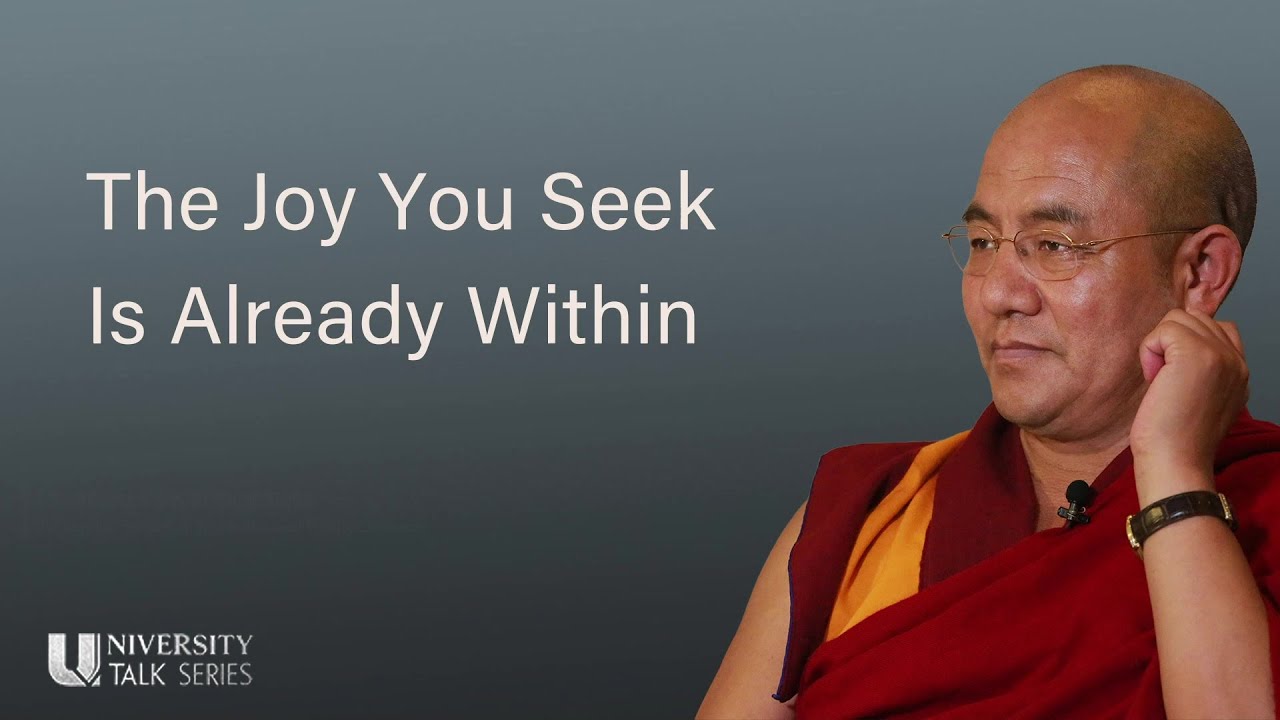
A Buddhist View of Happiness
A Buddhist View of Happiness The main speaker of this session is Khenpo Sodargye [Khenpo Sodargye's Lecture at London School of Economics and Political Science] The Khenpo introduced Buddhist perspectives on economics and social life from Buddhist scriptures, pointing out that true happiness lies not in external materials, emotions, or arts, but in inner meditation and abiding in one's nature. He emphasized that modern people suffer from psychological problems due to information overload, and suggested achieving inner peace and genuine happiness through mindfulness meditation. [] Highlights 1. Insights on the Source of Happiness Whether rooted in compassion or wisdom, if the motivation is pure, it brings unparalleled benefit to society and humanity as a whole. Yet, a deeper, more profound happiness can likely only be found through spiritual practice. 2. The Power of Meditation Why does meditation hold such power? In daily life, we are constantly besieged by various negative emotions... Once these emotions arise, no amount of material wealth can prevent life from becoming a chaotic, unmanageable mess. 3. The Metaphor of Inner Seeking This metaphor perfectly illustrates that we don't need to search externally for happiness. By simply letting go of negative emotions that are irrelevant and alien to our true nature, and resting in the mind itself, we can instantly discover our authentic, original self. 4. Buddhism's Relevance to Modern Life If you study this philosophical system from 2,500 years ago, you will find it fascinatingly applicable to the complexities of our modern economic life. 5. The Practice and Effect of Mindfulness As we deepen our practice of meditation, our quality of life naturally elevates, becoming more refined. The troubles and suffering of this world stem from a restless and anxious mind; but with a pure and settled mind, one can find joy even in a prison cell or amidst poverty.
Watch now